WorkplaceApproval
Approving content with a second pair of eyes, kept lean
A typo on the lobby screen is seen by everyone. How to set up a two-person approval without it becoming a bottleneck.
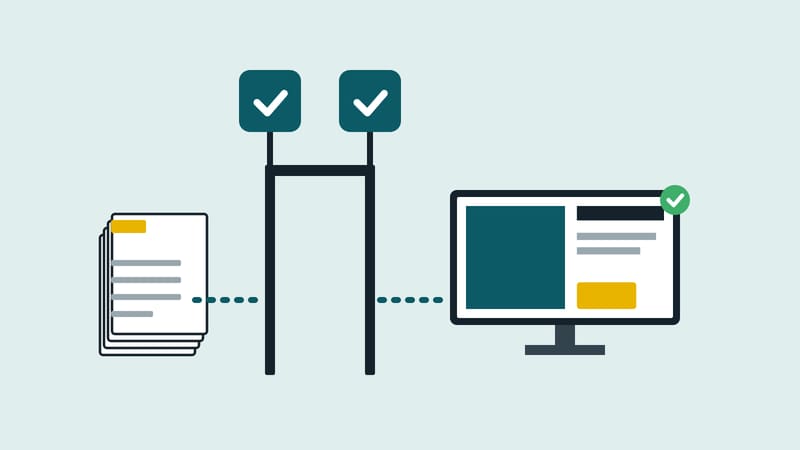
A mistake on the lobby screen is seen by everyone, and it stays up for as long as it takes someone to report it. It could be the typo in the managing director's name, a wrong price, or the competitor's phone number in a photo. For cases like these there is the four-eyes principle: content goes onto the screen only after a second person has seen it.
The principle has a poor reputation because it is often implemented clumsily. The approval sits in an inbox and the screen shows the old content for a week. It can be leaner.
Four questions up front
What gets approved? Not every item needs two pairs of eyes. A daily greeting in a fixed pattern needs no approval; a new price campaign does. Defining what requires approval relieves the reviewer and protects reliability where it counts.
Who approves? A person who did not create the content themselves and can judge the consequences. In small teams that is two colleagues checking each other; in larger ones a specialist department. A deputy matters, otherwise a holiday blocks operations.
How fast? A fixed response time belongs in the process. A workable value depends on the content: a daily offer needs an answer the same morning, a quarterly poster may take a few days. The time is agreed in advance and written down.
Where is it checked? Best where the content will later run. A draft that can be opened as a link or preview in the browser gets read more carefully than a file in an attachment. What is finally checked is the display, not the document: line breaks, margins, legibility.
A process in four steps
- Create. The authors create the content and check it themselves against a short list: spelling, prices, date, phone number, image rights.
- Submit for review. The draft goes to the responsible person with one sentence on the purpose and the desired start date. Nothing more is needed.
- Review and decide. The reviewers approve or reject with a reason. A rejection without a sentence helps nobody.
- Publish. Only after approval does the content go into the playlist. Who may place content there is a decision in its own right.
The fourth step is where most processes fail: if publishing is not technically separated from creating, the principle remains a declaration of intent. It is better if creating and placing are different permissions. Common systems allow giving an area only "view" or "manage" and releasing content to specific people or groups. Where that is missing, a preview link that the second person opens without logging in helps, together with an agreement on who then presses the button.
What approval does not do
It catches mistakes that are visible. A legal problem such as an inadmissible price comparison or an image without usage rights is only recognised by someone who knows the field. If the reviewers are not responsible for that, the process should say so openly and name a procedure for doubtful cases, such as the legal department or external advice. This article is not legal advice.
Exceptions for emergencies
A notice about a closure due to flooding or a power cut cannot wait for Tuesday's approval. For such cases an urgent rule belongs in the process: who may publish alone, who is informed afterwards, and how is it reviewed after the fact? An exception that is described beforehand does not weaken the principle. The exception someone takes for themselves in an emergency does.
Small checks, big effect
Two habits keep the procedure alive. Once a month the approving person looks at the running content on the screen itself, not in the administration. And every rejected approval ends up in a short list of frequent mistakes, from which the next checklist emerges. That turns the obligation step by step into a tool.
This magazine is published by Kapaso GmbH; the article describes an organisational process and refers to no product.