Market and DOOHContent checks
Ad creatives are checked for sensitive content before approval
In DOOH Hub a dedicated AI service looks at every new creative. It approves nothing and rejects nothing; it puts a note in front of the person who decides.
Kapaso solution: DOOH Hub is made by the publisher of this magazine.
An advert for beer cannot run on every screen. Not in a paediatrician's practice, perhaps not in a gym, and what runs on a pharmacy's screens is ultimately the owner's call. Anyone selling advertising time through a portal therefore has to know what a creative shows. Until now the advertiser stated a category when booking, and a person at the network looked at the creative. With a handful of bookings that works. With many, the visual check becomes the bottleneck.
DOOH Hub, Kapaso's advertising portal, has had an automatic content check since October 2026. It looks at every newly uploaded image and video, reads text in the picture and, for videos, listens to the soundtrack.
Seven kinds of content, two levels
The check knows seven kinds of content: alcohol, tobacco, gambling, nudity, violence and weapons, drugs, and hate symbols. Each finding comes with a level, either "clear" or "possible". Each network can also keep its own blocked terms, such as competitors' names. These are searched for in on-screen text and in speech, and only ever produce a note.
A person decides
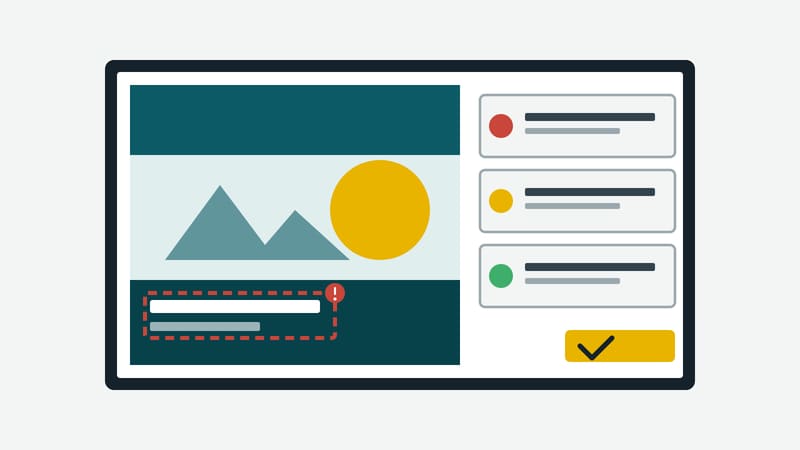
The check approves nothing and rejects nothing. Its result appears as a note wherever someone at the network decides on the creative, showing the kind of content, the level, and the spot in the image or on the video timeline.
For each kind of content a rule sets what a finding does: nothing, a note, or a block. The portal supplies a default; a network can tighten it or switch the check off for itself, but cannot loosen it. By default, tobacco, drugs and hate symbols apply everywhere, the other kinds wherever the booked screen already excludes that category.
Only a clear finding blocks. A "possible" never does, and a single conspicuous frame in a video puts the booking on hold instead of blocking it. A block can only be lifted by a person, who must give a reason. The override then applies to that exact content in that network.
What the advertiser sees
If the detected content does not match the stated category, the advertiser gets a query. If the creative is blocked they are told the kind of content and nothing more. They can pick a different creative or ask the network to review it.
If the check fails
If no result is available after ten minutes, the booking carries on as it would without a check. The network gets a flag and an email, and the check is run later. The automation never stops a campaign that is already running.
Where creatives are processed
The check does not use a large AI provider's API. The service runs on a server in Germany rented for the purpose and can be reached only from the portal through an encrypted tunnel. After the check the file is deleted there. The findings and the text that was read and heard stay in the portal.
What the check does not do
It only covers new uploads; existing material stays as it is. It judges neither the taste nor the legality of a creative. And it makes mistakes: the manufacturer has not yet published a dependable hit rate based on a large number of real advertising creatives. The note is therefore built as a second pair of eyes, not as a judge.
Details of the portal are at dooh-hub.com.
DS Content kompakt
The magazine’s newsletter: three articles and one practical tip, by email about every two weeks.