Market and DOOHMetrics
Ad play, impression, CPM: what DOOH metrics measure
Between “the spot ran” and “someone saw it” lie four levels. Knowing them changes how offers and invoices are read.
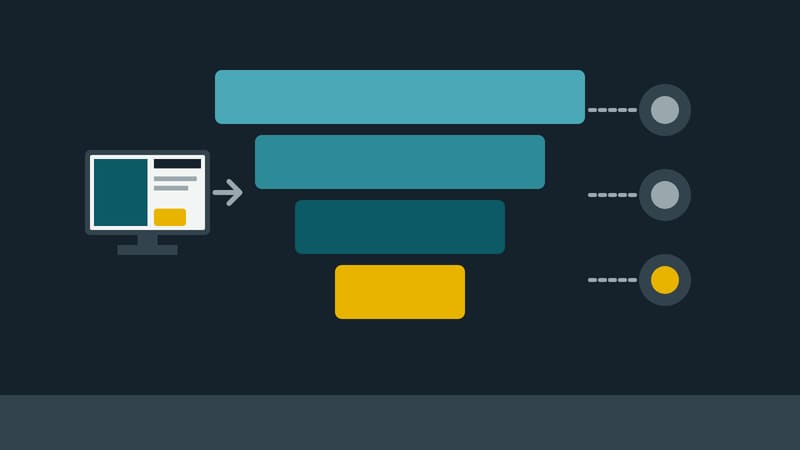
"Your campaign reached 1.2 million impressions." A sentence like this may appear in a campaign report. What it is worth depends on what was counted. In their standards for in-store retail media of September 2024, the advertising associations IAB Europe and IAB defined four levels. They come from retail but can be applied to any advertising screen.
Level 1: ad play
An ad play is the number of times an ad was displayed on a screen. It is the only figure the system itself knows for certain. It says nothing about whether anyone was nearby.
Level 2: gross impression
A gross impression is the number of individuals present in the screen's exposure zone during the ad play. The standards give the formula: ad impression equals audience times ad play. And they state explicitly that the figure does not necessarily mean the ad was seen.
Level 3: opportunity to see
Opportunity to see, or OTS, counts the people who could have passed the advertising. The word opportunity is key, the standards say: what is counted is not seeing but the possibility of it. OTS is described as the best proxy available for a viewable impression in store.
The standards work through an example: 50,000 shoppers per store per week, 100 stores, four weeks, 80 per cent of shoppers walk past the location, share of voice 100 per cent. That makes 16 million opportunities.
Level 4: likelihood to see
Likelihood to see, or LTS, adjusts the figure downwards by the likelihood that someone actually noticed the content. That takes sensors or analytics on site. At this point the standards note that there may be implications under the General Data Protection Regulation.
Share of voice
According to the standards, share of voice describes the percentage of time and space taken up by a brand's activation at a touchpoint. Their example is a digital screen ad that may be visible only 50 per cent of the time. If a ten-second spot runs in a 60-second loop, the share is one sixth. In the calculation above, 16 million opportunities would then become about 2.7 million.
The multiplier
In automated trading the audience is passed as a factor per ad play. The OpenRTB standard gives the example of 14.2 impressions for one play. The value can also be below one; the accompanying documentation mentions 0.32, because the figures come from statistical modelling. Anyone offered a multiplier should ask who determined it and by what method.
CPM
Cost per mille is plain arithmetic: price divided by impressions, times one thousand. An example: if a week on one screen costs 40 euros and 5,000 impressions are assumed, the CPM is eight euros.
The calculation is only as good as the number in the denominator. The same screen has a lower CPM with gross impressions than with LTS impressions, without anything about the advertising changing. Two offers are comparable only if both count the same level.
What a report should contain
As a minimum the standards require a network to report ad plays and gross impressions and to disclose the formula. Three questions for any report follow from that:
- How many ad plays are evidenced, and where does the evidence come from?
- Which impression level is reported: gross, OTS or LTS?
- Where does the audience figure come from: counting, estimation or modelling?
DS Content kompakt
The magazine’s newsletter: three articles and one practical tip, by email about every two weeks.