Market and DOOHBasics
Digital signage, DOOH, retail media: three terms
The three words are often used interchangeably. They describe a device, an advertising medium and a business model.
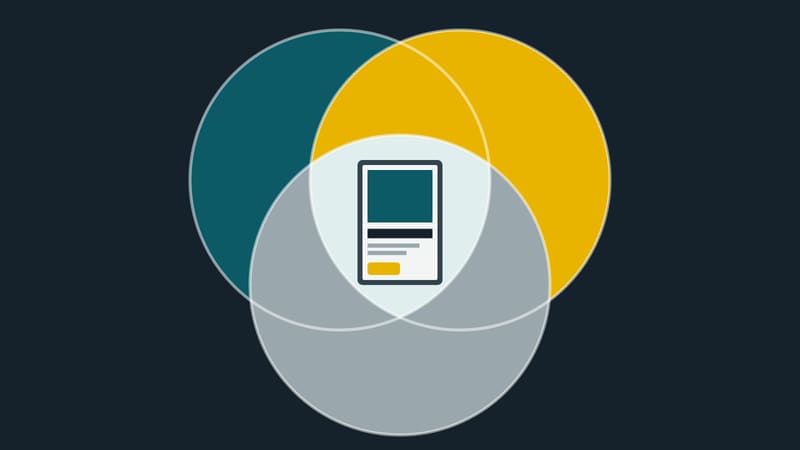
A screen hangs above the chiller cabinet in a supermarket. The store manager calls it digital signage, the agency talks about DOOH, head office about retail media. All three mean the same device, and all three are right. The terms describe different things: what the device is, what it is used for, and who earns money from it.
Digital signage: the device and how it is run
Digital signage is the technical umbrella term. It covers screens that are supplied with content remotely and address several viewers at once. An official definition can be found, of all places, in the EU's energy labelling rules. Delegated Regulation (EU) 2019/2013 describes a "digital signage display" as an electronic display designed primarily to be viewed by multiple people in non-desktop and non-domestic environments. Five features are part of it: a unique identifier for addressing a specific screen, a function that prevents unauthorised access to settings and image, a network connection for control and for receiving content, fixed mounting rather than a ground stand, and no tuner for broadcast signals.
The definition says nothing about content. The canteen menu is digital signage; so is the call display in a citizens' office, and so are the house rules in a lobby.
DOOH: the screen as an advertising medium
Digital out of home, or DOOH, describes a use: the screen shows third-party advertising and is paid for it. The technical standard OpenRTB from IAB Tech Lab sums up the difference from online advertising in one sentence: online, one impression is one user; out of home, a spot can be seen by everyone who happens to be nearby. Since version 2.6 the standard has therefore included a dedicated DOOH object and a multiplier that states how many impressions one ad play stands for.
For the operator, DOOH changes the list of duties. Anyone selling advertising needs proof of play, approval of creatives, rules for excluded categories and invoicing. A pure information network needs none of that.
Retail media: the retailer's business model
Retail media is neither a device nor a channel; it is something retailers offer to brands. The association IAB Europe defines it as the digital advertising space, retail data assets and in-store opportunities a retailer or marketplace owns and makes available to brands for campaigns. It divides the field into three environments:
- On-site: advertising on the retailer's own websites and apps.
- Off-site: advertising elsewhere that is bought using the retailer's data. The association explicitly lists DOOH here as well.
- In-store: digital opportunities inside the shop. The definition names radio, DOOH screens, TV, ATMs and hand scanners.
Seen this way, the screen is just one of several media. What sets retail media apart from ordinary DOOH is the retailer's data: the retailer knows what was sold and can measure a campaign against the till receipt.
Why the distinction is useful
The three terms lead to three questions worth asking before any project.
- Technology: how does content reach the screen, and who may change it? That is the signage question.
- Sales: is third-party advertising shown, and how is it proven and billed? That is the DOOH question.
- Data: is playout linked to sales data, and who owns that data? That is the retail media question.
A screen above the chiller cabinet may raise all three. The screen in a public authority's waiting area usually raises only the first. Settling this early avoids paying for advertising features nobody needs, and avoids discovering later that a proof-of-play duty was overlooked.
DS Content kompakt
The magazine’s newsletter: three articles and one practical tip, by email about every two weeks.