RetailShop window
A screen in the shop window: brightness, hours and content
Behind glass, different rules apply than inside the shop. What retailers should watch for in device, placement, operating hours and design.
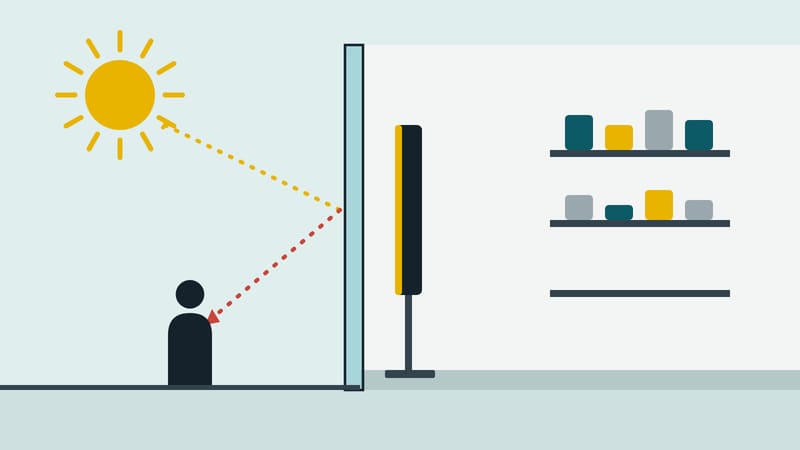
A screen inside a shop and one in the shop window share only the name. Outside, the sun shines, the glass reflects, and the audience is in motion. Anyone who simply puts the in-store solution at the window is surprised by a picture that is no longer recognisable after midday. Five decisions before buying make the result easier.
1. The device: brightness matters more than resolution
Behind glass the screen fights daylight. What counts is luminance, given in candela per square metre, or cd/m². Indoor devices are often built for calm light; shop-window devices are considerably brighter. As an example, a manufacturer states 450 cd/m² for a square 32-inch signboard and describes it as suitable for shop windows and walls. That figure comes from the manufacturer and has not been measured. Anyone who wants certainty hangs a sample image in the window at the least favourable time of day and looks at it from the passers-by's point of view.
A second question is the construction. Continuous operation, heat behind glass and the occasional blazing sun come with the use case. Devices designed for it say so in the data sheet.
2. The placement: against reflections
In daylight the glass also shows what lies opposite. A slight tilt of the screen, a gap to the glass and a darkened back wall reduce this. The quickest test is a photo taken from the pavement. If the picture can only be made out in the photo, it will not be seen in passing.
3. The hours: not around the clock
At night a shop window is useful mainly when someone walks by. In many streets that is not the case. Operating hours that switch the screen on and off by weekday save electricity. It is worth remembering that a window that stays bright in the evening can advertise even when the shop is closed. Whether that is wanted is the shop's decision, not the software's. Local rules may apply to outdoor advertising and illuminated signs; this article is not legal advice on that.
Content that changes with the time of day suits the window: breakfast in the morning, the dish of the day at noon, the next day's opening hours in the evening. Most systems provide time windows per item for this.
4. The design: one thought per image
Passers-by look for a moment as they walk. Good shop-window images say one thing in that time: a product, a price, an offer, an invitation. A second thought in the same image costs both.
- Large type, few words. What cannot be read from several metres away does not exist for passers-by.
- Contrast instead of delicacy. Fine lines and pale colours vanish in daylight. Dark ground with light type or the reverse, but clearly.
- Movement sparingly. A calm picture with a single change works better behind glass than a series of small effects.
- One goal. Whoever should come in is told what awaits inside. A web address or QR code on the window reaches few people and belongs, if anywhere, where people stop.
5. The upkeep: the window is the shop window
A shop-window screen is the first thing customers see, and it forgives least. A sticker from last season or an image from last week's promotion stands out there before anyone enters the shop. Two habits help: a weekly rhythm in which someone looks at the window from outside, and a fixed procedure for changing the promotion, with a start and an end.
When e-paper is the better choice
If the window should only hold a calm still image, an e-paper sign can make sense instead of a poster: it reflects ambient light like paper and needs power only when the image changes. In return it cannot show video, and the colour range is limited. It suits prices, opening hours and seasonal messages, not moving advertising.
This magazine is published by Kapaso GmbH; the article describes general practice. The manufacturer's figures cited come from the website aio-player.de, retrieved on 3 October 2026.
DS Content kompakt
The magazine’s newsletter: three articles and one practical tip, by email about every two weeks.