Health and public servicesAccessibility
Accessibility Act: which screens it covers, which not
Germany's Accessibility Strengthening Act has applied since June 2025. It does not cover pure displays, but it does cover certain touch terminals.
Germany's Accessibility Strengthening Act (Barrierefreiheitsstärkungsgesetz, BFSG) has applied since 28 June 2025. It transposes an EU directive, the European Accessibility Act, and for the first time obliges private companies to make certain products and services accessible. Operators of screens have since been asking whether the act applies to them. A look at the text shows that it names the affected devices one by one, and pure displays are not among them.
What the act says
Section 1(2) lists the products covered when they are placed on the market after 28 June 2025. For screens, number 2 is the relevant one. It names:
- payment terminals including their hardware and software,
- cash machines, ticket machines and check-in machines,
- interactive self-service terminals providing information.
The machines and terminals in the last two points are covered only where they are intended for providing the services the act itself regulates. These are listed in subsection 3: telecommunications, certain elements of passenger transport, consumer banking, e-books and e-commerce services.
What is not covered
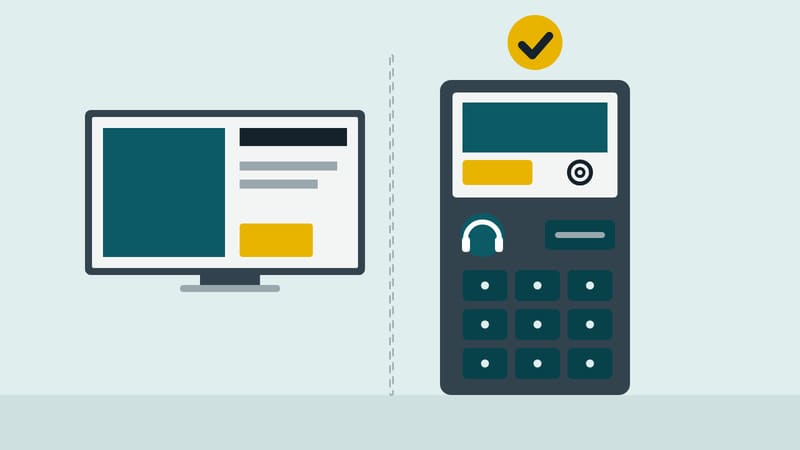
A screen that only displays is not a self-service terminal. The canteen menu, building information, the advertising loop in a shop window and the call display on the wall are not products within this list. Even for passenger transport the act draws the line explicitly: information screens are covered there only if they are interactive.
The line therefore runs between looking and operating. As soon as a customer selects, books or pays for something on a device, it is worth checking.
The borderline case in the waiting area
The machine where visitors take a queue number is harder. It is interactive. Whether it falls under the act depends on whether it serves one of the services named in subsection 3. For a doctor's surgery or a citizens' office that is not obvious. The wording does not settle the case explicitly. Public bodies are in addition subject to their own rules on accessible information technology, which exist alongside the BFSG.
Whatever the legal answer, the requirement is sensible. As an example, the Federal Accessibility Agency (Bundesfachstelle Barrierefreiheit) states that self-service terminals must offer speech output and allow headphones to be connected. Anyone buying a new machine should ask about that.
Transition periods for existing equipment
Section 38 protects devices already in use. Self-service terminals lawfully used before 28 June 2025 may continue to run until the end of their economic life, but no longer than fifteen years after they were first put into use. Services may be provided until 27 June 2030 with products used before the cut-off date.
Exemption for microenterprises
According to the Federal Accessibility Agency, companies with fewer than ten employees and no more than two million euros in annual turnover or balance sheet total are exempt in so far as they provide services. The exemption does not extend to products: anyone manufacturing or importing a terminal must meet the requirements, however small the business.
Three practical questions
- Does the device only display, or does someone operate it?
- Does it serve a service named in the act, such as payment, ticket purchase or online ordering?
- Was it placed on the market before or after 28 June 2025?
If the answer is "display only", the BFSG is not the relevant law. Good legibility remains a matter of care all the same.
This article is an overview based on the sources named and is not legal advice.