RetailRetail media
Five zones in the shop: what a screen does where
Two advertising associations have divided the shop into zones. The scheme is useful even for those who sell no advertising at all.
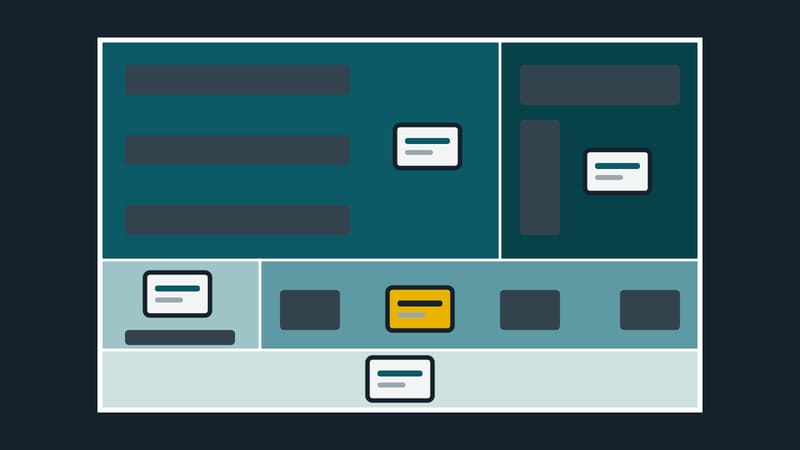
Anyone equipping a shop with screens soon asks where to put them. Is the screen better at the entrance or at the checkout? In September 2024 the advertising associations IAB Europe and IAB published joint standards for in-store retail media to address this. They are based on a workshop with 14 retail media networks. One section divides the store into five zones. The scheme is meant for selling advertising space. It works just as well as a planning aid for a retailer's own content.
Zone 1: exterior to store
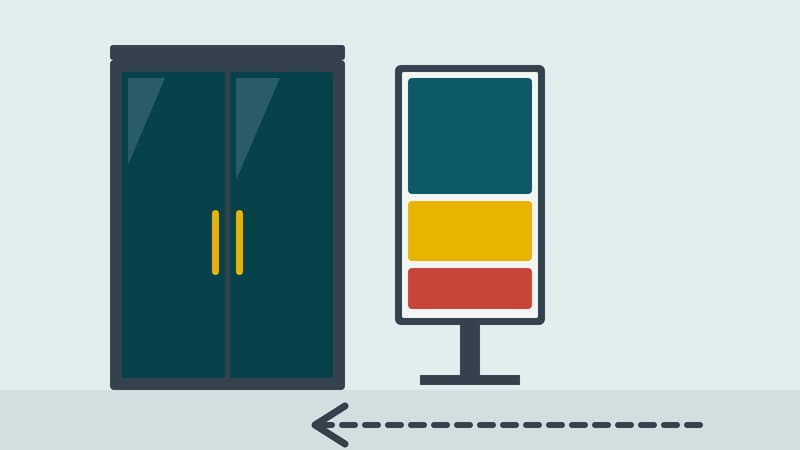
The first zone lies outside the door. The standards name, among others, the car park, the fuel station, charging stations, the exterior wall and the window display where it can be seen from outside. The customer is not yet in the shop and may only be driving past.
Editors' note: a few seconds and large type are what count here. The screen gives a reason to come in.
Zone 2: entrance
The second zone includes foyer displays, stand-alone displays, service kiosks such as self-service terminals or vending machines, and the area after the checkout up to the exit. The standards call it "entrance and out of category": the customer is in the shop but not yet at any shelf.
Editors' note: orientation and the week's offers fit here. People coming in are looking for their way and have nothing in the basket yet.
Zone 3: checkout
The third zone covers the conveyor belt, the queue, the shopper-facing screen at the till and the self-service checkout.
Editors' note: nowhere else does the customer stand still for so long. That speaks for content that may take a little time, and against offers for goods at the other end of the shop.
Zone 4: in the aisles
The fourth zone is the shelf and the aisle in front of it.
Editors' note: this is where the purchase decision is made. A screen in this zone refers to the goods within reach. The e-paper price label belongs here as much as the small screen in the shelf front.
Zone 5: other and connected store
The fifth zone is a catch-all. The standards name third-party services inside the store such as a bank branch, a café or an optician, the pick-up point for online orders, customer service and the shopping trolley with a screen.
Editors' note: at these points the customer is waiting for a service. Call displays, pick-up status and service information take priority over advertising here.
What the zones contribute to planning
Besides the zones, the standards define terms for scheduling. A loop is a segment of content and advertising programmed to a specific length that repeats; the example given is a six-minute loop. Dwell time is the time someone spends within view of the screen.
Taken together they yield the most important rule for content: the loop should match the dwell time of the zone. Six minutes is reasonable at the checkout. Outside the door a passer-by sees a single item in that time.
In practice a table with three columns is enough: zone, estimated dwell time, loop length. Where the third figure clearly exceeds the second, hardly anyone sees the end.
DS Content kompakt
The magazine’s newsletter: three articles and one practical tip, by email about every two weeks.